4 Quick Steps to Display Cards and Boards Using Keypup

In this step-by-step tutorial, you will learn how to display consolidated info. from your development stack (Git Repos + PM Tools) using Keypup.

Thomas Williams
Thomas Williams LinkedIn
• 4 min read
4 Quick Steps to Display Cards and Boards Using Keypup

Agile software development methodology is an iterative process aimed to deliver customer value faster by delivering work in small batches. Whether you use Kanban, Scrum or any other approach, you should be familiar with boards made of cards. In Keypup, you can add cards to any dashboard or create Boards in order for you to keep track of specific tasks or projects. Keypup does not aim to replace project management tools but to grant you access to your development data from git repositories and project management all in one place.

Here's how you can display a Board or Card with Keypup in 4 easy steps:

Add a Card or a board to a dashboard

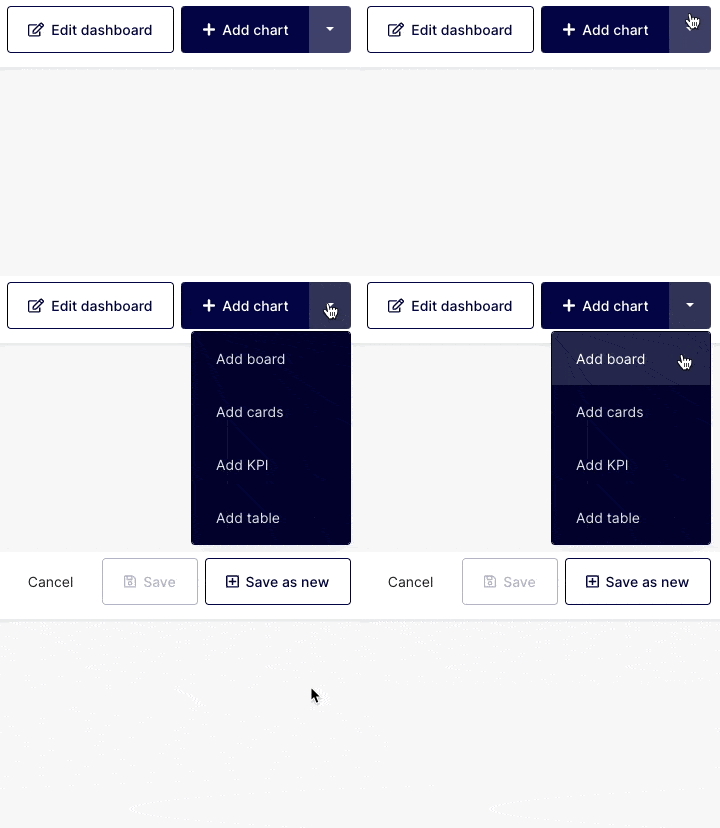
Click on any dashboard or in the Card collection found on the right-hand side of the navigation bar and select "Add Card" or "Add Board".
Image

Choosing Boards or Cards?

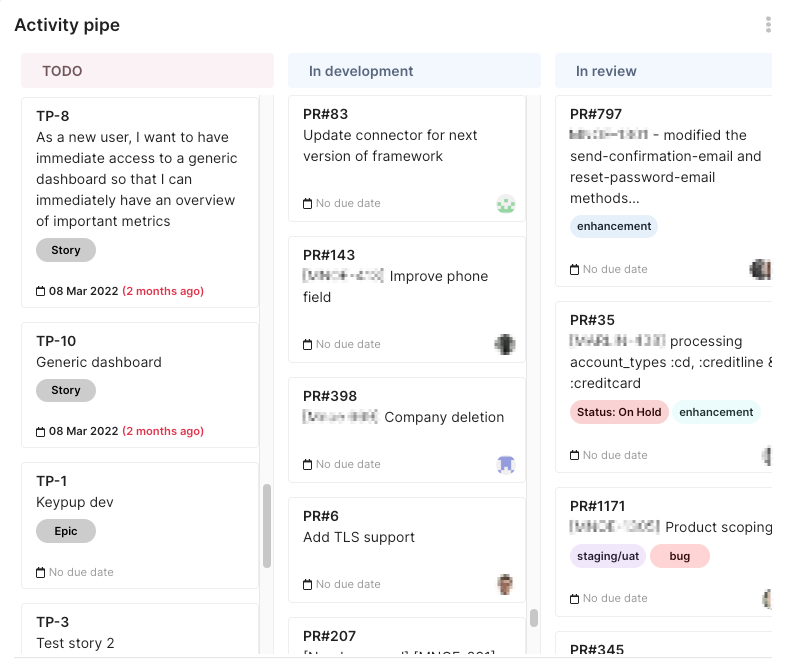
  • Boards: Boards are often used to showcase items (Pull Requests, Issues, Bugs…) assigned to specific projects or users and organized based on the priorities set by the organization (due date, project significance, etc.). It helps visualize a series of items and see them organized by stage or date.
Image

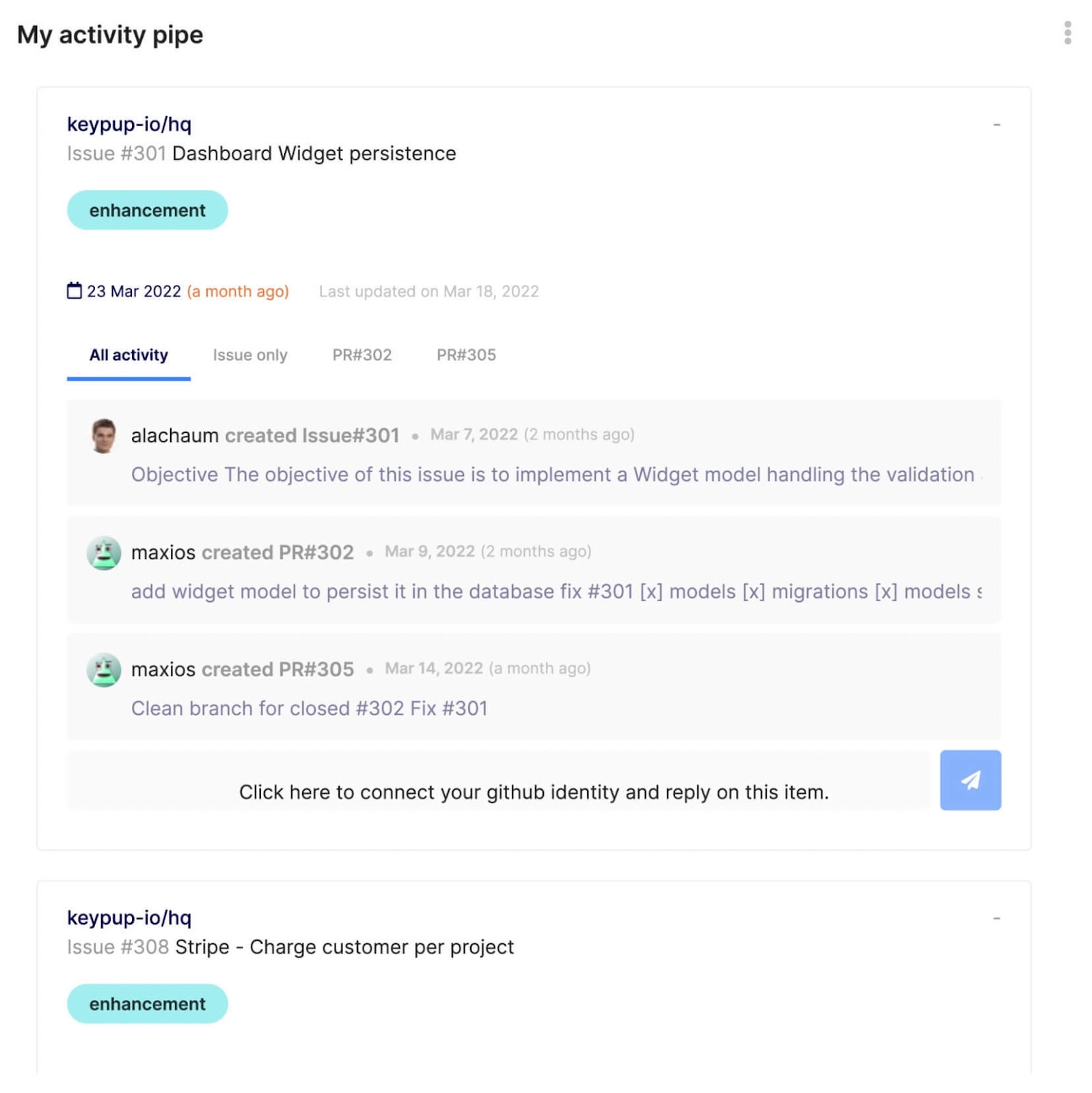
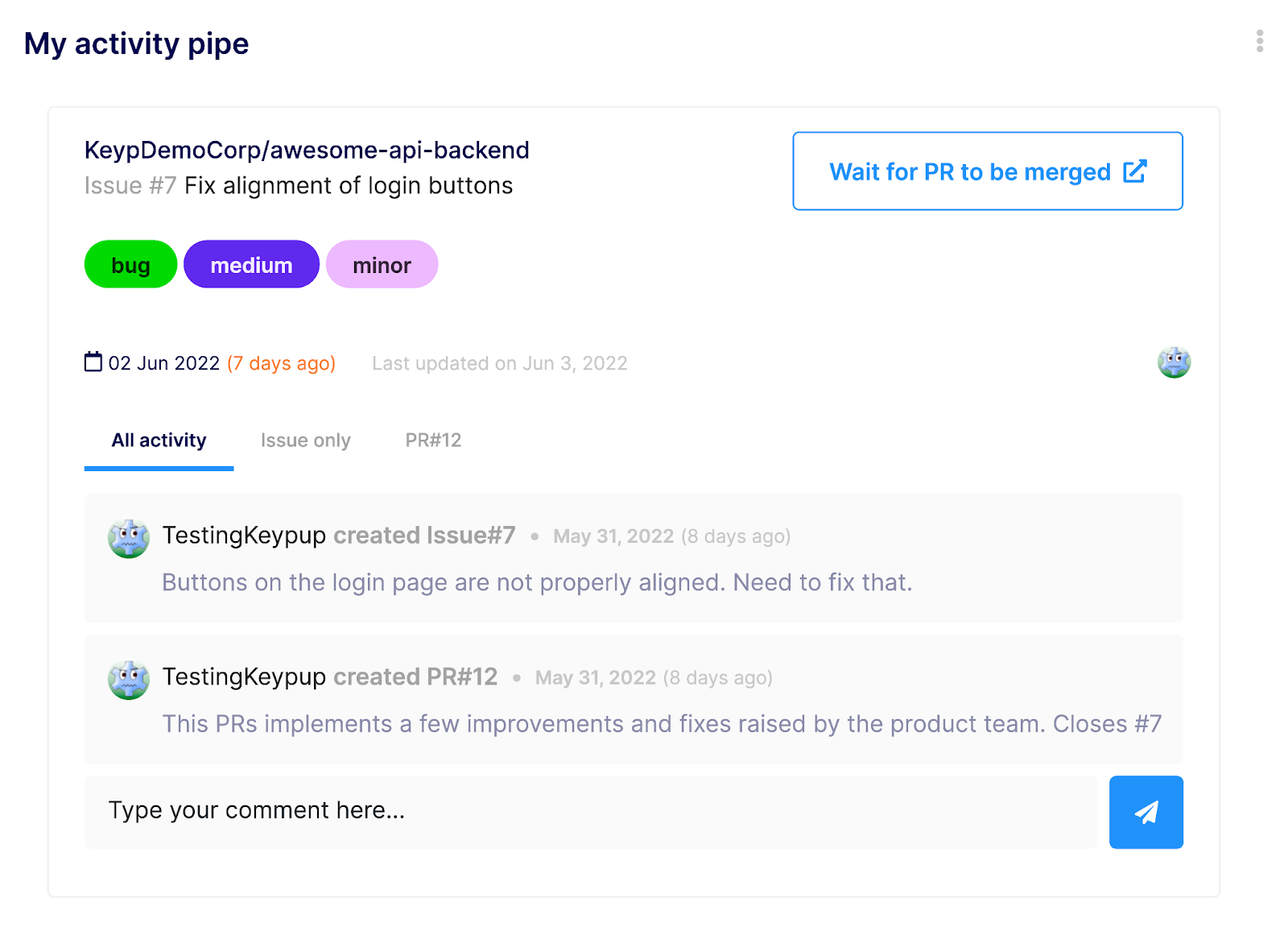
  • Card: Cards are a more detailed view of a particular item placed on a board. Their role is to provide granular information at a project or task level for the team or individuals.
Image

Image

Configure Filters

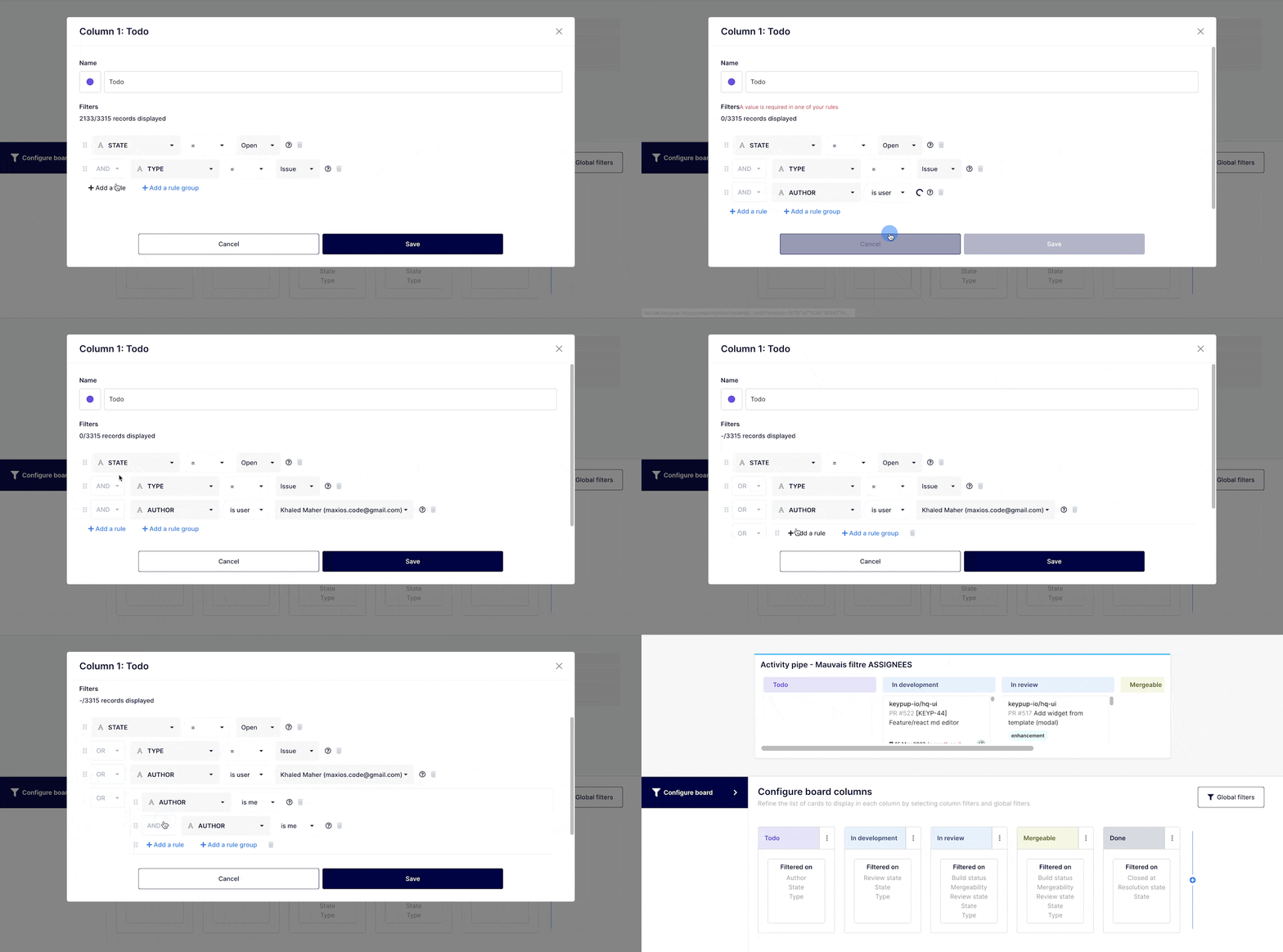
Boards and cards are created using "AND" / "OR," commands. Cards have 1 filter set only while Boards have filters for each column in addition to a global filter at a board level.

You can narrow down further a view at a board level by applying an additional filter (not applicable for cards). You can use this option, as an example if you want your entire team to use the same board but you want to see what is assigned to a particular team member.
Image

Customize your Chart / Board "look & feel" (optional)

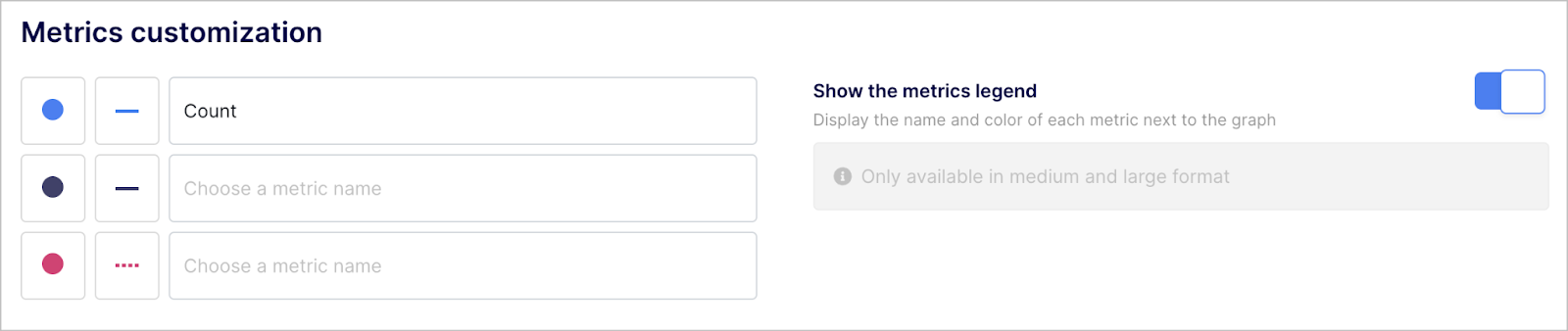
Customization of the boards and cards will be automatically suggested. Although it is not necessary, you will have the ability to further customize the look and feel of your boards and cards.
Image

Any questions or tips you would like to share? You can contact us directly in the chat from your Keypup interface or use this contact form.


Ready to Transform Your Analytics?

Join teams already using AI to make data-driven decisions faster than ever.

Most Recent Articles

The Bug SLA Mirage: Why Priority Fix Targets Are Missed and Nobody Knows

The Bug SLA Mirage: Why Priority Fix Targets Are Missed and Nobody Knows

Your bug SLA report says 91%. Your customers experienced 65%. Learn what engineering leaders on Reddit say about P1 fix-time targets, SLA clocks that start late and bugs closed to stop the timer at enterprise scale, and how Keypup MCP measures real SLA attainment by priority and team from Jira workflow history and linked pull requests.

Thomas Williams
The Dependency Bot Backlog: Why Dependabot and Renovate Pull Requests Pile Up Unmerged

The Dependency Bot Backlog: Why Dependabot and Renovate Pull Requests Pile Up Unmerged

Dependabot and Renovate open thousands of pull requests across enterprise repositories, and most of them are never merged, merged with no review, or left open for months. Learn what engineering leaders on Reddit say about dependency bot noise, unowned major upgrades and auto-merge risk, and how Keypup MCP measures the bot backlog by version bump, ecosystem, merge path, next action and owner.

Liam Davis
The Vendor Black Box: How to Measure Outsourced Engineering Teams with Git and Jira Data

The Vendor Black Box: How to Measure Outsourced Engineering Teams with Git and Jira Data

Enterprises spend millions on outsourced and offshore engineering vendors, yet most can only measure them through hours billed and status reports. Learn what engineering leaders on Reddit say about vendor black boxes, hidden review load and untraceable work, and how Keypup MCP compares vendor and in-house pull requests, review wait times, review load and Jira traceability to show what each vendor actually delivers.

Stephane Ibos